October 27, 2026
Quick answer
The fastest reliable way to get backlinks is to work in this order: claim, earn, then ask. First, claim the links you already qualify for, like unlinked brand mentions, partner pages, and business profiles. Then earn links by publishing something worth citing. Only then ask other sites for links with short, targeted outreach. There is no shortcut that replaces this order, and the shortcuts that promise fast links are the ones Google penalizes.
If you are new to backlinks, start with our guide on what backlinks are and why they still matter in 2026. This guide skips the definitions and focuses on methods.
What makes a backlink worth getting
Not every backlink helps. A link is worth getting when it meets four tests: it comes from a site that covers your topic, it sits inside real content where a reader would naturally click it, the site has a real audience, and the anchor text reads naturally. One link that passes all four tests beats ten links that pass none of them.
| Signal | Why it matters |
|---|---|
| Topical relevance | A link from a site in your field carries more weight than a link from an unrelated site. |
| Editorial placement | A link an editor chose to include inside an article is a real vote. A footer or sidebar link is not. |
| Real audience | Sites with real readers send referral traffic and get crawled often. Dead sites do neither. |
| Natural anchor text | Anchors that describe the linked page in normal words look earned. Repeated exact match anchors look built. |
One warning about metrics: Domain Rating and Domain Authority are third party estimates, not Google metrics. Use them as a rough filter when you vet a site. Never chase a metric number as the goal itself. A relevant site with a modest score and real readers is a better link than an irrelevant site with a high score and no audience.
Placement matters as much as the site itself. A link inside the body of an article, surrounded by relevant text, passes the most value and sends the most clicks. A link in an author bio still counts, but it carries less weight. A link buried in a footer, a blogroll, or a sidebar carries the least, and a page full of such links is a warning sign about the site. When you judge a prospect, ask where your link will sit, not just whether you will get one. Anchor variety matters too. A natural profile mixes branded anchors, plain URLs, and descriptive phrases. If every link you build uses the same keyword, the pattern itself becomes the problem. That is the real meaning of how to get good backlinks: a short list of links that pass these tests beats a long list that does not.
Start where you already qualify: claim your links
The most overlooked backlinks are the ones you can claim this week without creating anything new. Start here before you pitch anyone.
Unlinked brand mentions
Search for your brand name on Google and in tools like Ahrefs or Semrush. You will often find pages that already mention your brand but do not link to you. Send a short, polite message to the site owner and ask them to turn the mention into a link. This works because the site already decided you were worth mentioning. You are only asking them to complete the reference.
Partners, suppliers, and clients
If you work with other businesses, you probably qualify for links from their sites. Ask to be listed on a partner page, a client list, or a testimonial. A testimonial with a link back to your site is one of the easiest legitimate links to earn, and it reads naturally because it is based on a real relationship.
Business profiles and directories
Claim your profiles on Google Business Profile, Yelp, Trustpilot, G2, or Capterra where they fit your business, plus genuine industry directories. Many of these links are nofollow and most carry modest authority on their own. Their value is different: they build a natural base of citations around your brand and they help people find you. Our local citation services cover this base for local businesses.
How to find unlinked mentions
Finding mentions takes one afternoon. Search Google for your brand name in quotes, then again with words like “review”, “alternative”, or “vs” added. Set up a free alert for your brand name so new mentions reach you as they appear. If you use Ahrefs or Semrush, run a brand mention report and filter for pages that mention you without linking. Work through the list from the strongest pages down. A mention on a respected site in your niche is worth the message. A mention on a scraper site is not, so skip anything that looks auto generated or has no real author behind it.
Places you already appeared
Think back over podcasts you guested on, events you spoke at, communities you contributed to, and articles that quoted you. Each one is a page that could link to you. A short message asking for the link is usually enough, because the hard part, getting featured, is already done.
Earn links by making something worth citing
Asking for links is hard when you have nothing worth linking to. Earning links starts with publishing a page that other writers want to reference. The formats that earn links most reliably are statistics roundups, original surveys, free tools or calculators, definitive guides, and templates. A page like this earns links because it saves other writers work: they cite your numbers or your tool instead of building their own.
Citable structure matters as much as the content itself. Put a short answer first. State each finding in one line. Use clear headings that match the question a writer would ask. Add a short FAQ. This structure helps in two places at once: it helps your page rank, and it helps AI answers cite you, because AI Overviews quote fresh, clearly structured resources. A page that is hard to quote does not get quoted.
You do not need a research budget to do this. A survey of your own customers, a roundup of public data with your own analysis, or a simple calculator for your niche all count. What matters is that the page is original, useful, and kept up to date. A statistics page from 2022 that nobody updated will stop earning links, because writers will cite a fresher source instead.
What a citable page looks like
A strong citable page has four parts. First, a headline finding in the first paragraph, stated in one sentence. Second, a short note on where the numbers came from, so a writer can trust them. Third, the data itself, broken into small sections with clear headings, not one long wall of text. Fourth, a visible update date, so a writer checking the page knows it is current. When a journalist or blogger is choosing between two sources, they pick the one that is easier to trust and easier to quote. Make yours that page, and the links follow without you asking for most of them.
Ask with outreach that gets replies
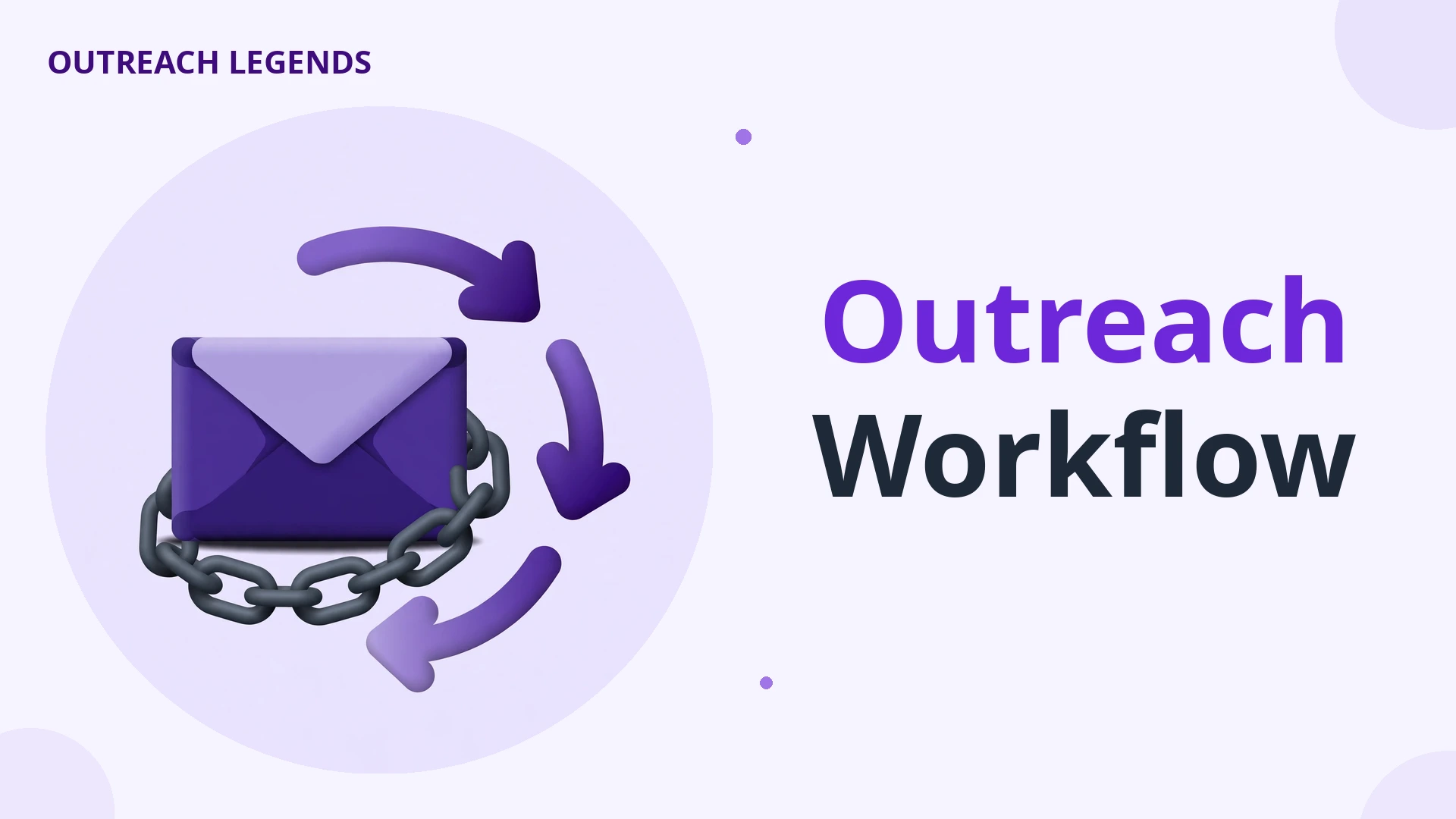
Outreach is where most link building actually happens, and it is also where most of it goes wrong. The difference is rarely the tactic. It is the process. At Outreach Legends, the workflow for any outreach campaign follows four steps, and skipping any one of them is how campaigns fail.
Step 1: Find the right prospects
Start with sites that already linked to content like yours. If a site linked to a similar guide, it has shown it links out on this topic. Resource pages in your niche are another strong source. So are journalists who covered your topic recently. Build a list of sites that fit your topic and audience, and drop any site that looks like a link farm, has no real content, or covers everything under the sun.
Step 2: Vet every prospect with a checklist
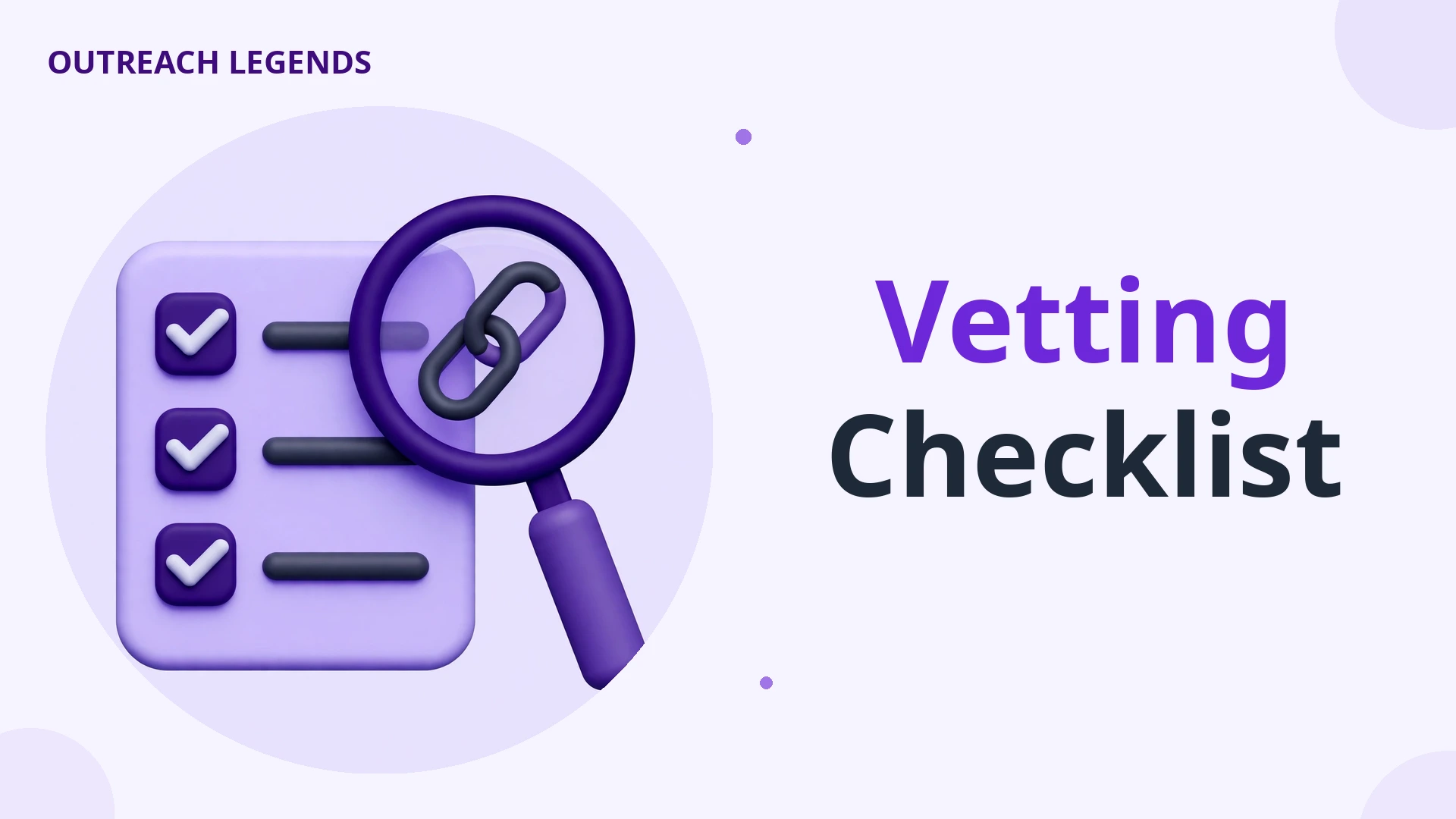
Before you write a single pitch, check each prospect against five questions. Is the site relevant to your topic? Does it have real traffic and real readers? Does it publish original content with editorial standards? Will the link sit inside an article, not a footer or a sidebar? Does the anchor text read naturally? If any answer is no, drop the prospect. A short list of good prospects beats a long list of bad ones every time. Learn to spot the bad ones quickly. A site with no about page, no named author, and articles on every topic from casino tips to plumbing is not a real publication. A site whose outbound links all go to money pages, or whose traffic graph fell off a cliff after a Google update, is a site to avoid. So is any site that answers your first message with a price list before asking what you want to publish. Real editors ask about the article first. Link sellers ask about the budget first.
Step 3: Pitch short, with one idea
The pitch should be under 100 words. It should name one specific idea, say why it helps that site’s readers, and make the next step easy. Generic blasts fail because they read like blasts. A pitch that mentions a specific article on their site and offers one concrete improvement gets read, because it shows you actually looked. Never open with a price, a package, or a list of services. Lead with the value to their readers.
Anatomy of a pitch that gets read
A pitch that gets replies has five parts, and none of them is long. The subject line names the idea, not your company. The first line shows you read their site, by naming a specific article. The second part states one idea in one sentence. The third part says why their readers benefit, in their terms, not yours. The fourth part is proof in one line, like a relevant page you already published or a result you already earned. The fifth part is one easy ask, such as whether they would like to see the draft. That is the whole pitch. Anything longer gets skimmed, and anything generic gets deleted.
Step 4: Follow up, then stop
One polite follow up with added value, like a new angle or updated data, often gets the reply the first email did not. A second follow up is the limit. After that, stop. Chasing a prospect past that point burns the relationship and your reputation. Move on to the next prospect on your list.
Where guest posting and link insertions fit
Guest posting still works, but it belongs last on your list, not first. Use it sparingly, only on real sites with real audiences, and only when you can write something genuinely useful for their readers. Our guest posting services follow that rule. Link insertions fit where your page genuinely improves an existing article, for example by adding a fresher source or a missing step. Our link insertion services work that way. Both methods fail when they are used as bulk tactics. They work when each placement is chosen by hand.
Digital PR for bigger links
When you have something newsworthy, like original data, a study, or a strong opinion backed by evidence, digital PR can earn links from news and magazine sites that never accept guest posts. The pitch is different: it leads with the story, not with your site. Our digital PR services cover this route. It takes more effort per link, but one strong press link can do the work of many smaller ones.
Journalist request platforms in 2026
Journalist platforms are one of the most reliable free sources of strong links, but the landscape changed. HARO, the platform most old guides still recommend, shut down in December 2024. Any guide that tells you to sign up for HARO today is out of date, and that is a useful test of whether a guide is fresh.
The replacements worth your time are Connectively, Qwoted, and Featured. They work the same way: journalists post requests for expert quotes, and you answer the ones you can answer with real expertise. The routine that works is 15 minutes a day. Read the requests, answer only the ones where you have genuine experience, and answer fast with a quotable response. Journalists pick the answers they can paste straight into an article. A long, vague answer loses to a short, specific one.
What makes a quote get picked
Three things decide it. First, specificity: a quote with a concrete detail beats a quote with a general opinion. Second, brevity: two or three sentences that stand on their own, because the journalist may use only that part. Third, a credential line: one short line on who you are and why you know this, so the journalist can attribute it without emailing you again. Write your answer so it can be copied into the article as it stands. If the journalist has to rewrite it, they will usually pick someone else’s quote instead.
Broken link building, kept short
Broken link building is simple and still works. Find resource pages in your niche that link to dead pages. Then offer your working page as a replacement. The site owner benefits because you fixed their page. You benefit because you earned a relevant editorial link. A related method, sometimes called the Moving Man Method, works the same way with sites that rebranded or shut down: find who linked to the old site, and offer your page as the updated resource. Both methods are slow per link, but the links are relevant and the success rate is higher than cold pitching, because you are offering a fix, not asking for a favour.
The steps are straightforward. First, list resource pages in your niche, the kind of pages that link out to dozens of guides and tools. Second, check their outbound links for dead ones with a link checker or a backlink tool. Third, confirm your page genuinely replaces the dead one, covering the same topic at equal or better quality. Fourth, send a short message naming the dead link, showing where it sits on their page, and offering your page as the replacement. Do not pitch a page that only partly matches. The owner will check, and a weak replacement burns the same goodwill a good one builds.
What to avoid
Shortcuts cost more than they save. Google publishes its spam policies openly, and the practices below sit squarely inside them. If a method promises dozens of links fast, it is almost certainly one of these.
- Buying followed links to manipulate rankings. If money changes hands, Google requires the link to carry a sponsored or nofollow attribute. A followed link bought to pass ranking signals violates the link spam policy.
- Private blog networks (PBNs). Networks of sites built only to sell links are easy for Google to detect, and links from them can trigger a manual action.
- Bulk link exchanges. Trading links at scale with unrelated sites is a link scheme, not a partnership.
- Comment and forum spam. Dropping links in comments and forums where they add nothing is spam, and it also damages your brand with anyone who sees it.
- Exact match anchor repetition. Repeating the same money keyword as anchor text across many links is a clear manipulation signal.
- Scaled low quality content. Publishing large volumes of thin pages only to host links falls under scaled content abuse, and it now sits alongside the older policies: link spam, site reputation abuse, and expired domain abuse.
Read Google’s own spam policies before you run any campaign. They are written in plain language, and they are the rules your whole strategy has to fit inside. If a vendor cannot explain how their method complies with these policies, do not use them. Our buy backlinks page explains how we approach paid placements honestly, with real sites and real editorial standards.
How long do backlinks take, and how many do you need
There is no fixed number, and anyone who promises one is guessing. How many links you need depends on your competition, your current link profile, and the keyword you are targeting. A local business targeting a low competition term may move with a handful of good links. A national brand in a competitive niche needs far more, and it needs them steadily over time.
On timing, expect weeks to months before a new link shows its full effect. Google has to crawl the linking page, process the link, and recalculate. New sites wait longer than established ones. The practical rule is that building backlinks steadily, month after month, beats a burst of links followed by silence. Judge a campaign after three to six months, not three weeks. Our first guide covers how many backlinks you need in more detail, including why quality beats quantity.
Track three numbers while you wait. First, referring domains, not raw backlink counts, because ten links from one site are not ten votes. Second, rankings for the specific pages you built links to, since that is where the effect shows first. Third, referral traffic from the linking sites, which tells you whether the links reach real readers. If referring domains grow, target pages climb, and referral traffic appears, the campaign is working even before revenue moves.
FAQs
What is the fastest way to get backlinks?
Claim what you already qualify for. Unlinked brand mentions, partner pages, and business profiles can produce links within days, because the relationship already exists. Earning and outreach links take longer, but they are the ones that move rankings.
How do I get backlinks for free?
Use the claim and earn routes. Ask sites that already mention you to add the link, answer journalist requests on Connectively, Qwoted, or Featured, and publish one page worth citing. Free does not mean effortless, but it does not require paying for placements.
How many backlinks do I need to rank?
It depends on your competition and your current profile. There is no universal number. A handful of relevant editorial links can move a low competition page, while a competitive term needs many more built steadily over time. Judge by the strength of your competitors’ profiles, not by a round number.
How long do backlinks take to work?
Expect weeks to months for the full effect. Google must crawl the linking page and recalculate. New sites wait longer than established ones. Judge a campaign after three to six months, not three weeks.
Should I buy backlinks?
Buying a followed link to manipulate rankings violates Google’s link spam policy. If money changes hands, the link must carry a sponsored or nofollow attribute. Placements on real sites with real editorial standards are a different matter, and our buy backlinks page explains the honest version of that route.
Does guest posting still work in 2026?
Yes, but only when it is used sparingly and on real sites with real audiences. Guest posting as a bulk tactic, on sites that exist to sell posts, stopped working a long time ago. One useful article on a respected site in your niche still earns a strong link.
What replaced HARO?
HARO shut down in December 2024. The platforms that replaced it are Connectively, Qwoted, and Featured. They work the same way: journalists request expert quotes, and you answer the requests where you have real expertise.
Do AI search engines count backlinks?
AI answers cite sources, and they tend to cite fresh, clearly structured pages. A backlink still signals trust to Google, and a citable page earns mentions in AI answers as well. The practical lesson is the same in both worlds: publish pages that are easy to quote, and earn links from sites that are easy to trust.
Start with the claims you already own
You do not need a big budget or a big team to start. This week, make one list: every page that mentions your brand without linking, every partner who could list you, and every profile you have not claimed. Those are links you already earned. Send the messages. Then pick one page on your site and make it worth citing. Keep the whole effort in one simple tracker, with each prospect, its status, and the date of your last message, so no prospect gets pitched twice and no reply gets lost. That sequence, claim, earn, ask, is the whole method. Everything else is detail.
If you want the outreach done for you, whether for your own site or for your clients, contact us and tell us about your site. We will tell you honestly which route fits.
Looking for Quality Backlinks?
Let Outreach Legends help you find relevant websites and manage your link-building outreach from start to finish.