November 6, 2026
Quick answer
A dofollow link is a normal link with nothing holding it back. It is a plain hyperlink that search engines can follow, read, and count as a vote of confidence.
In code, it looks like this: <a href="https://example.com">Example</a>. There is no special attribute to add. A link is dofollow by default.
A link stops being dofollow only when someone adds a qualifying value to it. Those values are rel="nofollow", rel="sponsored", or rel="ugc". This post shows you what each one means, how to check any link in seconds, and how to earn dofollow links that actually help your rankings.
What is a dofollow link?
A dofollow link is a standard hyperlink with no rel attribute qualifying it. Search engines can crawl through it to the linked page. They can also treat it as an editorial reference and use it as a ranking signal.
The name is slightly misleading. There is no rel="dofollow" attribute in HTML, and there never has been. “Dofollow” is just SEO shorthand for a normal link.
Google’s own documentation says regular links that should be fetched and parsed do not need a rel value. You write a normal link, and it is dofollow. That is the whole secret.
Ahrefs calls these links “followed” links instead, because nothing in the code tells search engines to hold back.
Dofollow link vs dofollow backlink
The two terms describe the same link from different sides. A dofollow link is any normal link on any page. A dofollow backlink is a dofollow link on someone else’s site that points to your site.
When SEOs talk about building dofollow backlinks, they mean earning this normal link treatment from other websites. They want a plain link that search engines can count.
Our first post explains what backlinks are and how they work.
Dofollow vs nofollow vs sponsored vs ugc
Four values decide how Google reads a link. Only one of them is dofollow, and it is the absence of the other three.
| Link type | HTML | What it tells Google |
| Dofollow (followed) | <a href="https://example.com">Example</a> | A normal editorial link. Crawl it, read it, and count it as a reference. |
| Nofollow | <a href="https://example.com" rel="nofollow">Example</a> | Do not treat this as an endorsement. Do not pass ranking credit in the normal way. |
| Sponsored | <a href="https://example.com" rel="sponsored">Example</a> | This link exists because of an ad, sponsorship, or other payment. |
| UGC | <a href="https://example.com" rel="ugc">Example</a> | A user added this link, in a comment or forum post. The publisher did not place it. |
Google introduced nofollow in 2005 to fight comment spam. In September 2019, it added sponsored and ugc, and it changed how all three are read.
That 2019 change is the most misunderstood fact in this whole topic. Before 2019, nofollow was a strict instruction. Google would not count a nofollow link as a signal at all.
Since September 2019, all three values are hints for ranking. Google treats them as hints about which links to consider or exclude within search. Since March 1, 2020, nofollow is also a hint for crawling and indexing.
Google explains the change in its 2019 announcement on evolving nofollow. Its current guidance lives in the qualify your outbound links documentation.
What the hint change means in practice
A nofollow link is not invisible to Google anymore. Google may still crawl the linked page, and it may use the link as a hint in limited ways.
But a nofollow link is still not treated like a clean editorial vote. A dofollow link is a full recommendation, while a qualified link is a recommendation with a note attached.
Any guide written before September 2019 that calls nofollow a hard block is out of date. Judge every source on this topic by whether it mentions the 2019 change.
Why dofollow links matter
Dofollow links matter for four reasons. Each one is a different job the link does for your site.
1. They help search engines discover your pages
Google finds new pages by following links. A dofollow link from an indexed page gives Google a path to your page. Without that path, a new page can wait weeks to be found.
This is the discovery benefit, and it happens before any ranking effect. A page Google has never crawled cannot rank at all.
2. They pass link equity
Link equity is the ranking value a page passes to the pages it links to. It is also called PageRank or link juice. A dofollow link can carry this value to your page.
A link from a trusted, relevant page passes more value than a link from a weak page. One editorial link from a respected site can do more than dozens of links from sites nobody reads.
No single link guarantees a ranking jump. Google uses many signals, and the linking page, its relevance, and its placement all change how much value flows.
Our post on the benefits of backlinks covers all nine benefits in full.
3. Anchor text helps Google understand your page
The clickable words of a link are called anchor text. They tell Google what the linked page is about. A dofollow link carries its anchor text as part of the signal.
A link that says “sourdough baking guide” tells Google the destination page is about sourdough baking. A link that says “click here” tells Google almost nothing.
4. Internal dofollow links pass value inside your own site
Most guides only talk about backlinks from other sites. Internal links matter too, and they work the same way. A dofollow link from your homepage to a new blog post passes value to that post.
This is the easiest dofollow link you will ever build, because you control your own site.
Internal links also help readers find your best pages. A reader who finishes a blog post and finds a link to your service page is one click from contacting you.
How to check if a link is dofollow
You can check any link in about ten seconds, two ways: read the code yourself, or use a backlink tool for a whole profile.
Method 1: Inspect the link in your browser
Open the page that contains the link. Right-click the link and choose Inspect. Your browser opens its developer tools with the link’s HTML highlighted.
Look at the line that starts with <a href=. If it has no rel attribute, the link is dofollow.
If the rel value only says noopener or noreferrer, it is still dofollow. Those values are browser security settings, not ranking signals.
If you see rel="nofollow", rel="sponsored", or rel="ugc", the link is not dofollow. You can also view the page source and search for the target URL to check the same thing.
This method is free and exact. Use it whenever a single placement matters, such as a link you paid for.
Method 2: Check a whole profile in Ahrefs
Inspect works for one link. A backlink tool works for hundreds.
In Ahrefs Site Explorer, open the Backlinks report and use the Link Type filter at the top. Select Dofollow to see only the links that pass link equity.
The report lists every live backlink to the domain, filtered by link type. It takes less than a minute once the report loads.
A tool report is an audit layer, not the final word. Always spot-check important placements in the live HTML, because tools can lag behind the live page.
Our guide on how to check competitor backlinks shows the full Ahrefs workflow step by step.
The page-level nofollow trap
There is one trap that catches even experienced SEOs. A page can carry a robots meta tag that says nofollow. When it does, every link on that page becomes nofollow, even if no single link has a rel value.
The tag looks like this in the page head: <meta name="robots" content="nofollow">. Check for it when a link you expected to be dofollow shows up as nofollow in a tool.
This trap is also a buying lesson. Before you pay for a placement, check the page, not just the link. A dofollow link on a nofollow page is not a dofollow link at all.
When to use a dofollow link, and when to qualify it
The rule is simple. Use a normal dofollow link when you trust the destination and you are citing it because it helps the reader. Qualify the link when the relationship behind it needs explaining.
| Situation | Use this |
| You cite a trusted source because it helps the reader | Dofollow (no rel value) |
| You link to your own social profiles or testimonials | Dofollow (no rel value) |
| You link between pages on your own site | Dofollow (no rel value) |
| The link is an ad, sponsorship, affiliate link, or paid placement | rel="sponsored" |
| The link sits in a comment, forum post, or user profile | rel="ugc" |
| You cite a page you cannot vouch for, and neither value above fits | rel="nofollow" |
Google prefers rel="sponsored" for paid links, though nofollow is still accepted. You can combine values when more than one applies, such as rel="ugc sponsored" for a paid link a user posted.
Two mistakes to avoid here. Do not nofollow every external link by default. A dofollow link to a trusted source is normal and correct.
Do not use nofollow as a substitute for noindex. If you want a page out of Google’s index, a link attribute is the wrong control.
How to make a link dofollow in WordPress
WordPress makes every link dofollow by default. You only need to act when a link carries a rel value you do not want.
Remove a rel value in the block editor
Click the link in the editor, then click the pencil icon to edit it. Open the Advanced settings and delete the value in the Link Rel field, then save.
The link is now a plain anchor tag. That is all it takes to make it dofollow.
Add a rel value in the block editor
Follow the same steps, but type the value into the Link Rel field instead. Type sponsored for a paid link, ugc for a user link, or nofollow for a link you do not want to endorse. Save, and the value is added to the link.
Watch out for comment links
WordPress adds rel="ugc" to links in comments automatically. That is correct behavior, so leave it alone.
Some SEO plugins add nofollow to all outbound links by default. Check your plugin settings if your links keep showing up as nofollow.
Check links added by page builders
Elementor and other page builders have their own link settings. The link control usually includes a rel field. Leave it empty for a dofollow link, and fill it only when the relationship needs qualifying.
After publishing, inspect one link live to confirm the code is what you intended.
What makes a dofollow link valuable
Not every dofollow link is worth the same. A dofollow link on a page nobody reads does almost nothing for you. Five checks separate a valuable dofollow link from a weak one.
| Check | Valuable link | Weak link |
| Relevance | The linking page covers your topic | The linking page is about something unrelated |
| Placement | The link sits inside the main content | The link sits in a footer, sidebar, or comment |
| Page quality | The page is indexed and gets real traffic | The page is not indexed, or no one visits it |
| Anchor text | The clickable words describe your page naturally | The anchor is stuffed with exact-match keywords |
| Link attribute | A plain link with no qualifying rel value | A link qualified by a page-level nofollow meta tag |
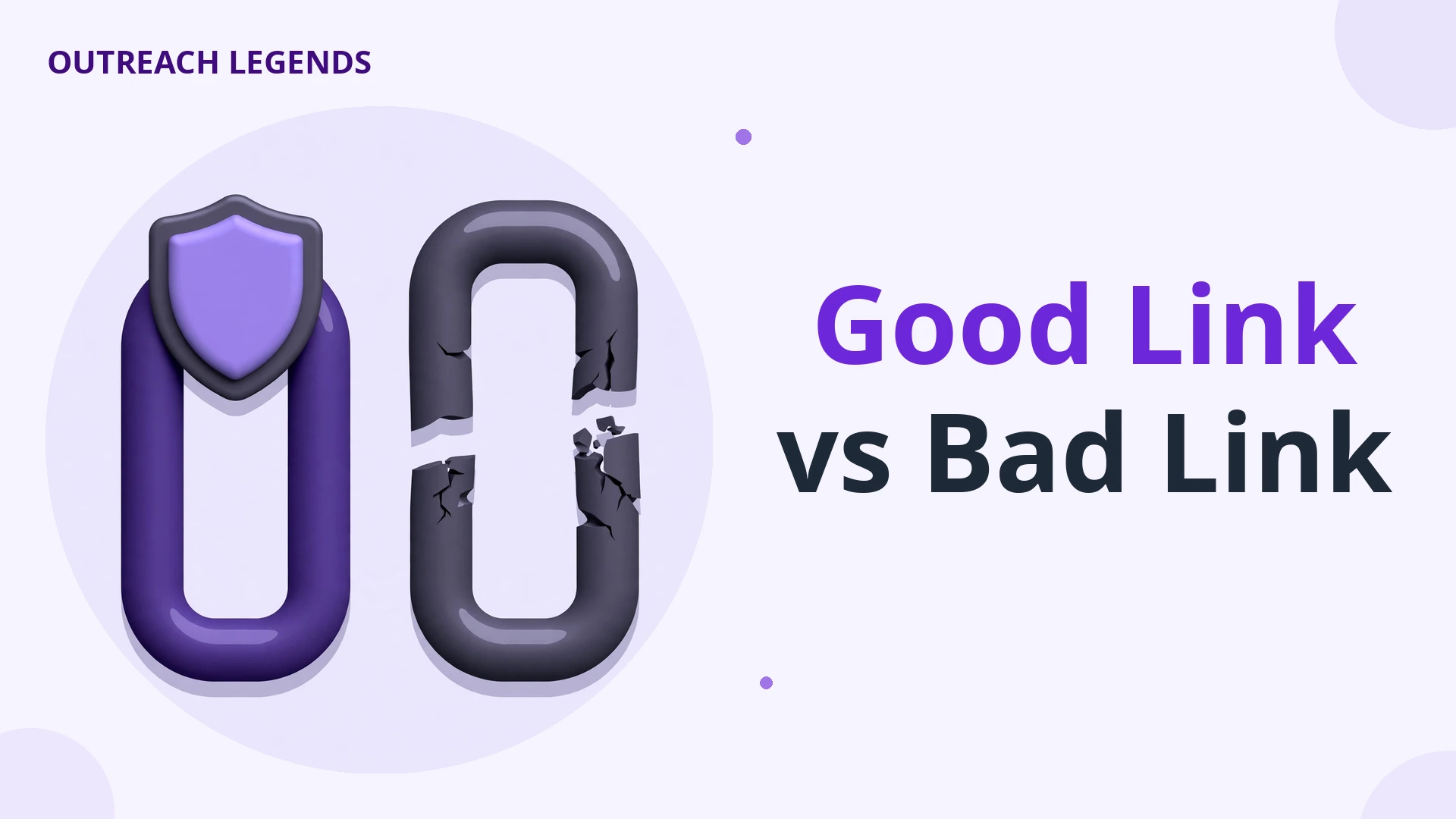
A good example: a food blog links to a local bakery inside an article about sourdough. The link sits in the main text, the anchor is the bakery’s name, and the page gets real readers.
A bad example: the same bakery’s link sits in the footer of a directory page with two hundred other links. The page has no traffic, and the anchor is stuffed with keywords.
Our backlink examples post shows eight real-world examples, good and bad, so you can judge any link in seconds.
Ask one question before you celebrate any dofollow link. Would this page link to me anyway, because my content is useful to its readers?
If the honest answer is yes, the link is probably valuable. If the answer is no, the link exists only for rankings, and that is the kind Google learns to ignore.
How to earn dofollow links
Earning dofollow links means giving publishers a real reason to link. Six methods work consistently.
Publish guest articles on relevant sites
Write a genuinely useful article for a site your audience already reads, and place one link inside it where it helps the reader. Check the publisher’s guidelines first, because some sites nofollow outbound links by house policy.
Our guest posting services work on exactly this principle.
Place links in existing editorial content
A link insertion adds your link to an article that already ranks and already gets traffic. It works best when your page genuinely improves the article.
Turn unlinked mentions into links
If a publisher mentions your brand without linking, ask whether they will add a citation. Keep the request short. If the publisher adds a normal link, that mention becomes a dofollow backlink.
Publish original research
A small report, survey, or price comparison gives other writers something to cite. Original data earns links that outreach alone cannot buy.
Use digital PR and journalist sourcing
Journalist sourcing earns dofollow links when your expertise, data, or quote helps a writer finish a real story. Digital PR coverage carries real authority.
Replace dead citations
Broken-link building works when you find a useful page with dead outbound links and offer a relevant replacement. If the editor accepts it, the new link is usually dofollow.
Our guide on how to get backlinks covers the full method step by step. It includes the vetting checks that keep you away from bad links.
5 mistakes to avoid with dofollow links
Mistake 1: Buying dofollow links
Buying links to manipulate rankings is link spam under Google’s spam policies. Paid placements are fine only when they are marked with rel="sponsored" or rel="nofollow".
A seller who promises “100 dofollow links for $50” is selling links on sites nobody reads. A pattern of them can hurt your site, so earn links instead of renting them.
Mistake 2: Chasing a dofollow ratio
There is no required ratio of dofollow to nofollow links. A profile is not safer because it hits a neat percentage, and it is not risky just because most of its best links are dofollow.
The risk comes from where the links live, not from the ratio. Automated link programs, link farms, and thin pages built only to carry links are the problem.
Mistake 3: Adding rel=”dofollow” to your links
There is no such attribute. Adding rel="dofollow" does nothing, because Google does not recognize it.
A plain link with no rel value is already dofollow. Do not add markup that means nothing.
Mistake 4: Treating nofollow links as worthless
Nofollow links still send referral visitors and help search engines discover your pages. They also keep your link profile looking natural, because a real site earns both kinds of links.
A nofollow link on a relevant, high-traffic page can beat a dofollow link on a page nobody reads.
Mistake 5: Asking every publisher to make links dofollow
Some legitimate sites nofollow outbound links by house policy. Asking them to change policy for you wastes goodwill and rarely works.
If the page is indexed, on topic, and read by the people you sell to, take the placement. Do not forecast the same ranking credit as an editorial followed link.
Dofollow link audit in 15 minutes
Checking one link takes ten seconds. Auditing your whole profile takes fifteen minutes. Run this audit once a month.
Step 1: Pull your backlinks
Open Ahrefs Site Explorer and enter your domain. Go to the Backlinks report.
Use the Link Type filter and select Dofollow. This is your working list.
Step 2: Sort by traffic
Sort the report by the traffic of the linking page. Links from pages with real traffic matter most. A dofollow link on a page with zero traffic is a low priority, even if the domain looks strong.
Step 3: Check the top 20 by hand
Open the top 20 linking pages and inspect each link. Confirm it is really dofollow in the live HTML, the page is indexed, and the placement is in content.
Step 4: Flag the page-level trap
For any link that shows as nofollow in the tool but looks clean in the HTML, check the page head for a robots nofollow meta tag. Note those pages. A placement on a nofollow page is not delivering what you thought.
Step 5: Compare with a competitor
Pick one competitor who outranks you for your target keyword. Open their Backlinks report in Ahrefs and filter for Dofollow.
Note the publishers linking to them that do not link to you. Those publishers already cover your topic, so they are your warmest outreach targets.
Our post 4 guide shows this competitor workflow in full.
Step 6: Write down three actions
End the audit with three concrete actions, such as pitching the publishers your competitor has and you do not. An audit with no actions is just a report.
FAQs
What is a dofollow link?
A dofollow link is a normal hyperlink with no rel attribute qualifying it. Search engines can crawl through it, read it as an editorial reference, and use it as a ranking signal.
Is there a rel=”dofollow” attribute?
No. There is no rel="dofollow" attribute in HTML, and there never has been.
A plain link with no rel value is already dofollow. Adding rel="dofollow" does nothing.
What is the difference between a dofollow link and a nofollow link?
A dofollow link is a plain link that search engines can count as a vote of confidence. A nofollow link carries rel="nofollow", which tells Google not to treat it as an endorsement or pass ranking credit in the normal way.
Since 2019, Google treats nofollow as a hint rather than a strict rule. A nofollow link is still not the same as a dofollow link for ranking purposes.
Do dofollow links help SEO?
Yes. Dofollow links help search engines discover your pages and pass link equity. They are one of the strongest ranking signals, but no single link guarantees a ranking jump.
How can I tell if a link is dofollow?
Right-click the link and choose Inspect. Look at the line that starts with <a href=.
If it has no rel attribute, or only noopener or noreferrer, the link is dofollow. If you see nofollow, sponsored, or ugc, it is not.
Can a page make all its links nofollow?
Yes. A robots meta tag with content="nofollow" in the page head turns every link on that page into nofollow.
Are nofollow links worthless?
No. Nofollow links still send referral visitors and help search engines discover your pages.
They also keep your link profile looking natural. A nofollow link on a relevant, high-traffic page can be worth more than a dofollow link on a page nobody reads.
How many dofollow links do I need?
There is no fixed number. A local business may compete with dozens of good dofollow links, while a site in a competitive niche may need hundreds. Compare your profile with the sites already ranking for your target keyword.
Should I buy dofollow links?
No. Buying links to manipulate rankings is link spam under Google’s spam policies.
Paid placements are fine only when they are marked with rel="sponsored" or rel="nofollow". Earn links by creating pages worth citing.
Closing
A dofollow link is the simplest link on the web: a plain link with nothing added and nothing held back.
Check every link you care about. Earn links from pages your audience actually reads. Audit your profile once a month, so you always know which links are doing real work.
Do that consistently, and dofollow links stop being a mystery. They become a habit, and the habit becomes rankings.
If you want the outreach done for you, whether for your own site or for your clients, contact us and tell us about your site. We will tell you honestly which route fits.
Looking for Quality Backlinks?
Let Outreach Legends help you find relevant websites and manage your link-building outreach from start to finish.